Date
18-27 June 2026 (Mon - Sat)
Time
9:30am - 4:00pm
Venue
Pontifical University of St. Thomas Aquinas (Angelicum), Rome, Italy
Co-leader
Prof. Bryan Van Norden (Vassar College)
Co-leader
Prof. Giorgio Pini (Fordham University)
Seminar and Colloquium/ Centre for Sino-Christian Studies
.jpg)
Date: 18-27 June 2026 (Mon - Sat)
Time: Schedule to be confirmed
Venue: Pontifical University of St. Thomas Aquinas (Angelicum), Rome, Italy
Co-leaders: Prof. Bryan W. Van Norden (Vassar College) and Prof. Giorgio Pini (Fordham University)
Participation Mode: In-person
*Interested participants should refer to the "Format/General Scheme" and "Application Procedures" sections below for application details. Incomplete applications will not be considered.
.
To acquaint scholars of Asian philosophical traditions with scholastic thought, both in its original sources and in contemporary discussions incorporating appeal to scholastic philosophy, as well as to acquaint those interested in scholastic thought with Asian philosophical tradition in the same way.
.
There has been a notable lack of attention to the way that Eastern and Western metaphysics have significant areas of overlap in their traditions around the problem of mind and related issues. This seminar aims to remedy this fact by drawing together experts in Neo-Confucianism and Scholasticism, providing a basic introduction to both traditions and to their metaphysical perspectives.
Questions regarding “mind” were central to debates among Neo-Confucians in the East as well as to many debates in later medieval Scholasticism. In the Scholastic tradition, there was extensive development of the Aristotelian account of the human being as a combination of body and soul, conceived of as matter and form, alongside long-standing Trinitarian reflection on the nature of ‘person’ as referring to something uniquely individual and particular. Scholastics likewise spent a great deal of time working out the cognitive mechanisms and modules through which we mentally interact with extra-mental reality. All of these topics have, in various ways, become of great contemporary interest to those working on systematic issues in physics, neuroscience, chemistry, ethics, politics, and cognitive science.
The Neo-Confucian tradition is a natural partner to that of the scholastics on many of these topics, holding the potential to illuminate, complement, and challenge scholastic perspectives in fruitful ways. Central to the Neo-Confucian tradition was a metaphysics centered around the concepts of Pattern (li), the structure of the universe, which is fully present in everything that exists, and qi, the spatio-temporal stuff that individuates, speciates, and “characterizes.” The major sects of Neo-Confucianism agree that one can distinguish between the “mind of the Way” and the “human mind,” but argue passionately over how to understand this distinction using the Pattern/qi metaphysics, without succumbing to dualism. An aim of this seminar is to explore the ways that these themes might be drawn into dialogue with areas of contemporary interest around scholastic theories in philosophy of mind and epistemology, since there are many correspondences to scholastic themes and insights within Neo-Confucian schools.
This seminar is intended to introduce graduate students to Neo-Confucian and Scholastic perspectives on the nature of “mind,” and how it relates to broader issues in metaphysics, as well as to more specific issues of personal identity, epistemology, and morality. No prior experience is necessary doing comparative philosophical work or with both of these philosophical traditions, but preference will be given to students or scholars who have research interests in at least one of the two major traditions being surveyed.
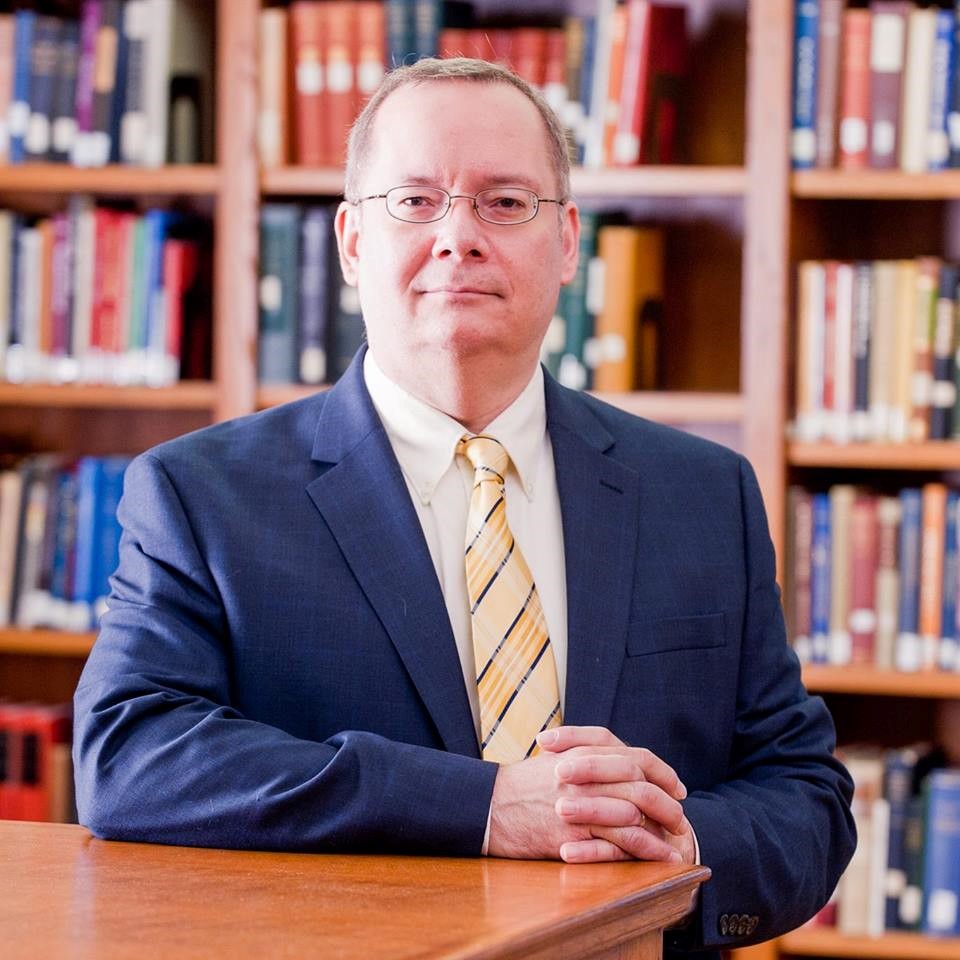
Prof. Bryan W. Van Norden is James Monroe Taylor Chair in Philosophy at Vassar College (USA). Van Norden has published ten books on Chinese and comparative philosophy, including Introduction to Classical Chinese Philosophy (2011), Taking Back Philosophy: A Multicultural Manifesto (2017), Readings in Later Chinese Philosophy: Han to the 20th Century (2014, with Justin Tiwald), Readings in Classical Chinese Philosophy (3rd ed., 2023, with P.J. Ivanhoe), and most recently Classical Chinese for Everyone: A Guide for Absolute Beginners (2019). A recipient of Fulbright, National Endowment for the Humanities, and Mellon fellowships, Van Norden has also been honored as one of The Best 300 Professors in the US by The Princeton Review.
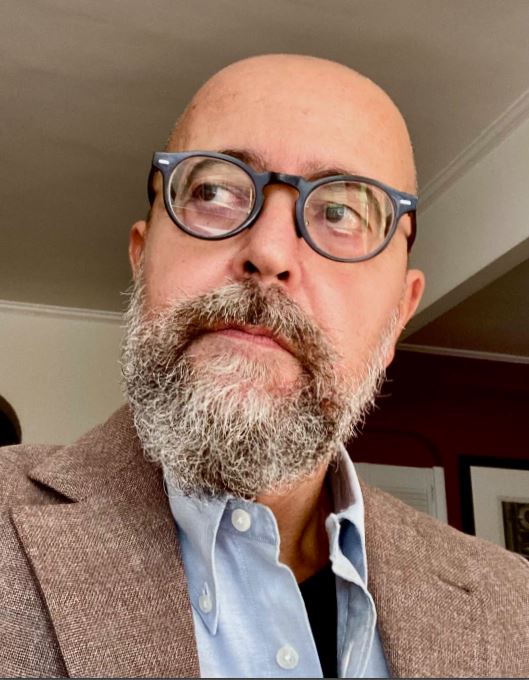
Prof. Giorgio Pini is Professor of Philosophy at Fordham University, NY (USA). His area of specialization is medieval philosophy in the Latin tradition. After obtaining his PhD from the Scuola Normale Superiore (Pisa, Italy) in 1997, he held postdoctoral positions at the Katholieke Universiteit Leuven (Belgium) and the Pontifical Institute of Mediaeval Studies (Toronto, Canada). He has been teaching at Fordham since 2005 and held appointments at Cornell University, KU Leuven, All Souls College (Oxford), and the Institute for Research in the Humanities at the University of Wisconsin-Madison. He has published extensively on John Duns Scotus and other later medieval thinkers, including Thomas Aquinas, Giles of Rome, and Henry of Ghent. He is currently Book Review Editor for the Journal of the History of Philosophy.
................................................................................................................................................................................................................................................
● The seminar will take place on campus at the Pontifical University of St. Thomas Aquinas (Angelicum) in Rome, Italy.
● There will be sessions from roughly 9:30 am-4:00 pm from Monday to Saturday, with Sunday free. Each morning will open with lectures and a seminar-style discussion of the texts and issues at hand. Each afternoon will involve presentations of papers by participants and further seminar-style discussions of topics relevant to the participants’ interests.
● Fifteen PhD students will be admitted to this seminar as presenting participants. All admitted participants to the seminar will have food, accommodation, and travel reimbursed after successful completion of the seminar. (Expenses for international travel will be subject to review, as we will only cover reasonable expenses within a stipulated limit.)
● Each admitted participant will be required to write a 4000-word paper that can be presented during the seminar. (Topics will be assigned in the process of preparing for the seminar.)
Applicants will be required to submit completed application materials.
Applicants will receive a confirmation email regarding the success of their application from cscs@hkbu.edu.hk. The specific date of notification will be announced in due course after the application deadline.